
"continuous roasting"
7000 article(s) found

Coffee roasting problem when is dehydration? How many degrees does it take to climb?
When is dehydration? How many degrees does it take to climb? Smoke exhaust problem? What is the taxiing action? These professional knowledge about coffee roasting must be the skills that many coffee roasters want to know, so here is a little experience for coffee lovers: however, it is only a simple introduction. For details, please refer to coffee roasting and other related books or interested coffee lovers.
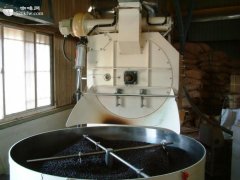
Analysis of roasting process of Coffee Bean Baking Technology
1. Dehydration: generally refers to the baking process below 170 degrees. Different baking appliances require different dehydration time, but it is usually best controlled at 5-8 minutes, depending on the water content of the beans. two。 Climbing temperature: usually the climbing temperature speed of baking is controlled between 7 and 14 degrees, which is related to the control of firepower, the better climbing temperature speed is controlled at about 10 degrees, and the water content of beans is different.

Coffee roasting knowledge such as dehydration, temperature climbing, smoke exhaust and taxiing
When is dehydration? How many degrees does it take to climb? Smoke exhaust problem? What is the taxiing action? These professional knowledge about coffee roasting must be the skills that many coffee roasters want to know, so here is a little experience for coffee lovers: however, it is only a simple introduction. For details, please refer to coffee roasting and other related books or interested coffee lovers.
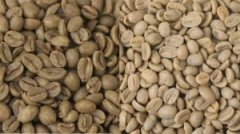
The origin and formation of the sour taste of roasted coffee
Raw coffee beans contain sour ingredients such as citric acid, malic acid, quinic acid and phosphoric acid, but these are not the main sources of sour taste when drinking coffee. The acid produced during baking is the main source of sour taste. Raw beans produce a series of chemical reactions during baking to form new acids. The most important thing is that chlorogenic acid is decomposed to form quinic acid and oligosaccharides.

Do not drink unbaked coffee roasting degree
The heat of shallow roasting is mild, because the sour aroma of flowers and fruits is most preserved by fermentation, so it is easy to smell the sour aroma of coffee. If the baking continues, that is, from the end of the first explosion to the middle baking before the second explosion, or even the medium and deep baking from the first explosion to the second explosion, most of the sour aroma of the fermentation catalysis has been broken up, instead of the taste spectrum of the sugar browning reaction (Sugar Browning) and Mena reaction.

Introduction to the knowledge of roasting coffee beans join the roaster
Pay attention to the sound changes-coffee beans make two bursts during baking, and the first burst is low, indicating that the starch begins to turn into caramel and the water evaporates with carbon dioxide. The second burst sound is more violent and sharp, this is the sound of coffee bean cell fiber fracture, at this time should immediately stop heating, and as soon as possible with cold air to lower the temperature of the bean. The first explosion and the second explosion

How can coffee and raw beans be roasted to taste good? What are the key points of coffee bean roasting technology? A lot of baking time
Professional coffee knowledge exchange more coffee bean information please follow the coffee workshop (Wechat official account cafe_style) coffee beans how to roast good? What are the key points of coffee bean roasting technology? How long is the baking time? Recently, many brown lovers will ask some questions about baking skills, including: when is dehydration? How many degrees does it take to climb? Smoke exhaust problem?

Four stages of professional coffee bean roasting
1. Steaming stage: 00-10min; Dou-140C; this is the most important process of the endothermic reaction of coffee beans. At this stage, the beans will slowly expand, the color will change from green to white, and the moisture will slowly evaporate from the bean heart because of the heat absorption of the beans. Mother's mouth found that whether the coffee tastes good or not depends on this stage, when the water evaporates too quickly, it is easy to cause the bean heart not to be ripe.

Water content in the roasting process of coffee-Starbucks Italian roasted coffee beans
Water content in the process of coffee roasting Starbucks Italian roasted coffee beans, whether new or old beans, have its unique baking curve, we must accurately judge the bean and bean time, and master the best flavor. In the process of recording the baking curve, carefully and blindly test each batch of baked beans, record them, and accurately grasp the key elements, you can easily get the mouths that coffee beans should have.

What kind of flavor changes do light baking and moderate baking produce during baking? Between the two
Professional coffee knowledge exchange more coffee bean information please follow the coffee workshop (Wechat official account cafe_style) Qianjie Coffee brief introduction roasting when light roasting and medium roasting respectively what kind of flavor changes light roasting is more mild, so the "enzyme action" of flowers and fruit sour aroma retain the most, it is easy to smell the sour aroma of coffee. If you continue to bake,

Coffee bean roasting theory basic knowledge of fine coffee beans
Grab a handful of coffee raw beans smell, there is always a pungent smell, very different from the impression of the charming smell of coffee. However, after roasting "fragrance" correctly, raw beans will emit the strongest aroma in the world. The small high-altitude Arabica coffee raw beans are like a warehouse full of chemicals. At present, scientists have identified more than 2,000 known ingredients, including 700 to 700.
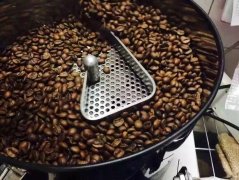
Fresh coffee is not the best time to drink fresh coffee.
The fresher the coffee beans, the more aromatic substances they retain, but the beans are not as fresh as possible. There is a period called the bean cultivation period, which most freshly roasted coffee beans have to go through. In fact, freshly roasted coffee beans are often either unable to extract the flavor they should have, or with a lot of woody odors. Because the roasted coffee beans
High-quality coffee learns the roasting theory of coffee beans
Grab a handful of coffee raw beans smell, there is always a pungent smell, very different from the impression of the charming smell of coffee. However, after roasting "fragrance" correctly, raw beans will emit the strongest aroma in the world. The small high-altitude Arabica coffee raw beans are like a warehouse full of chemicals. At present, scientists have identified more than 2,000 known ingredients, including 700 to 700.
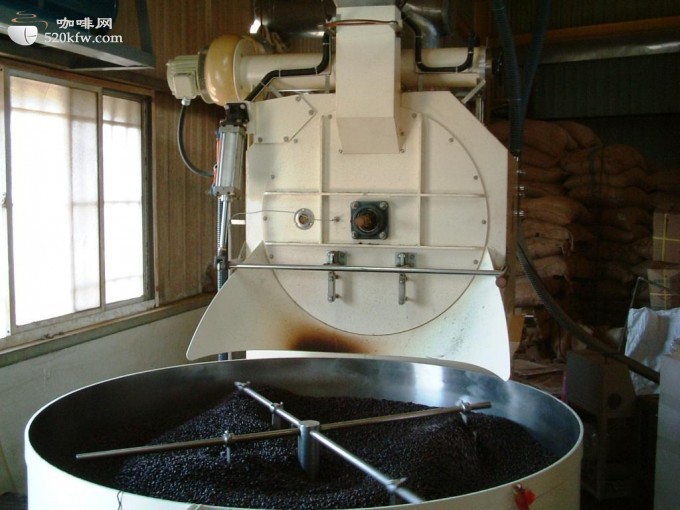
Introduction to roasting technology of coffee beans: introduction of baking knowledge and detailed operation process
1. Dehydration: generally refers to the baking process below 170 degrees. Different baking appliances require different dehydration time, but it is usually best controlled at 5-8 minutes, depending on the water content of the beans. two。 Climbing temperature: usually the climbing temperature speed of baking is controlled between 7 and 14 degrees, which is related to the control of firepower, the better climbing temperature speed is controlled at about 10 degrees, and the water content of beans is different.

Kotowa is an organization that continues to produce the finest coffee in Panama, with complex spicy floral notes.
For more information on coffee beans, please follow Coffee Workshop (Wechat official account cafe_style) Kotowa, which means mountain range in the language of the indigenous Ngobe community, an organization that continues to produce the finest coffee in Panama. Famous for their old river power mills, they recently built a new facility to meet their growing demand for crops.
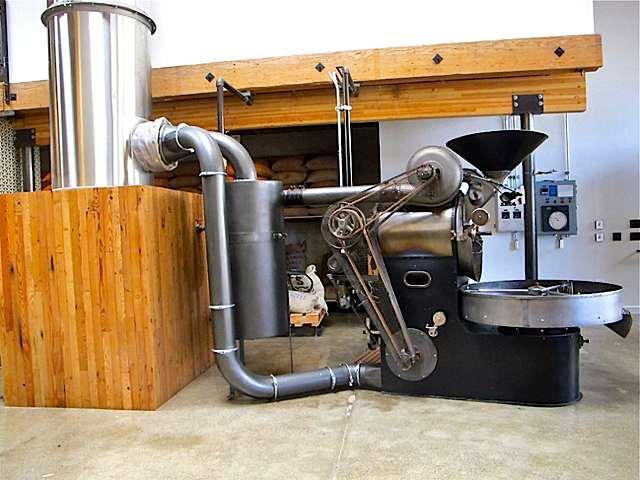
How to better judge and clean up the blockage of the exhaust pipe of the roaster
[introduction] for professional coffee roasting, pipe congestion is always a headache. Coffee beans roast at the same time will produce oil fume, this oil fume is not only exhaust gas, but also mixed with a lot of silver dandruff, as well as dirt impurities carried by raw beans, as long as the coffee roaster continues to run, for professional coffee roasting, pipe congestion is always a headache. The roast of coffee beans is the same.
How to better judge and clean up the blockage of the exhaust pipe of the roaster
[introduction] for professional coffee roasting, pipe congestion is always a headache. Coffee beans roast at the same time will produce oil fume, this oil fume is not only exhaust gas, but also mixed with a lot of silver dandruff, as well as dirt impurities carried by raw beans, as long as the coffee roaster continues to run, for professional coffee roasting, pipe congestion is always a headache. The roast of coffee beans is the same.

How commercial coffee beans are baked _ how commercial coffee beans are cooked _ report on the price of commercial coffee beans
Professional coffee knowledge exchange more coffee bean information Please follow the coffee workshop (Wechat official account cafe_style) commercial coffee raw beans, after roasting, become cooked coffee beans (roasted beans), resulting in a unique color, aroma and taste. The heat is high when baking.

Why is freshly baked coffee not so good? how to raise beans?
Professional barista Communication Please pay attention to the Coffee Workshop (Wechat official account cafe_style) the fresh coffee beans will retain more aromatic substances, but the beans are not as fresh as possible. There is a period called the bean cultivation period, which most freshly roasted coffee beans have to go through. In fact, freshly roasted coffee beans often fail to extract the flavor they should have.

Enjoy doing clumsy things: baking technology in the 19th century
Is it the change of science and technology, the change of society, or the change of society that promotes the change of science and technology? There is no clear answer to this question. But what we can be sure of is that the two have been moving forward at the same time, transforming coffee roasting in the 19th century from a large-scale, private form to a large-scale enterprise that uses advertising and mass marketing skills.